
New Energy Vehicle
Teaching Software For Training Room Construction
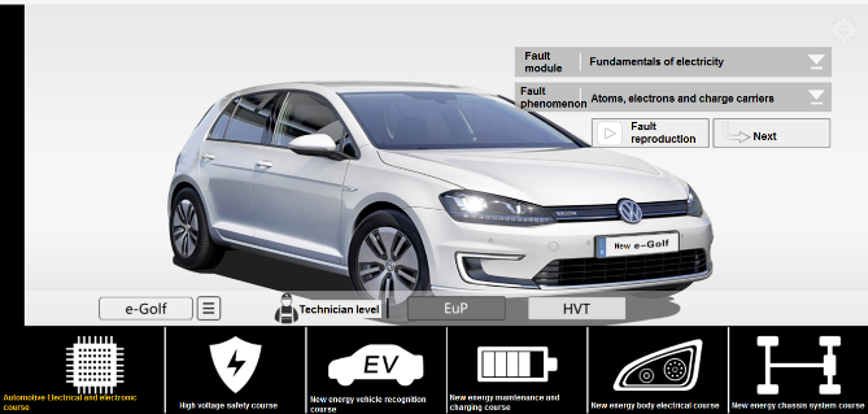
Intelligent App Teaching System
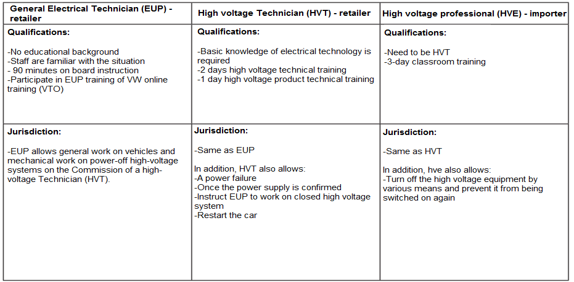
(based on the curriculum system designed by German Volkswagen New Energy qualification certification, three levels of EUP / HVT / HVE)
The system app course resource package is based on the technical data of the host plant and the real cases of dealers. Through cloud computing and teaching mode drills, the real system knowledge and maintenance cases are reproduced in the teaching scene. The resource package is sorted out by the original factory maintenance manual and training system, and the video demonstration is conducted in the form of micro-course and animation. The course content is guided by a flipped classroom Each knowledge point or fault case contains a description of ability elements matching with the course and micro-video, graphic display, and micro-video of structure principle introduction. Knowledge points and skill points are connected through cases so that students can remember and verify repeatedly in the process. To achieve the goal of technical training. In the teaching process, the teacher only needs to guide the students to complete the work tasks, properly introduce the key information, and display the designed ability elements description and knowledge key content in the case through the intelligent app, which can perfectly present the classroom.
Functions
1. According to different courses
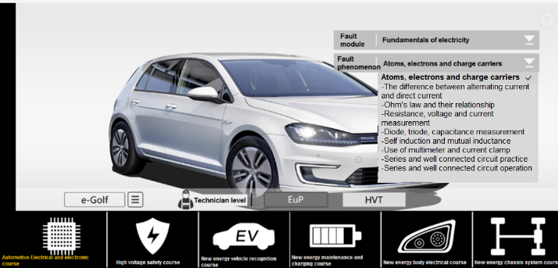
Through the selection of fault modules, teachers can freely, intuitively, and quickly select various fault modules. Each fault module has a relative fault. Now, through the description of fault restoration, the fault phenomenon in the maintenance case can be reproduced in the intelligent training room. The fault accessories and operation guidance required for fault restoration are recorded in the manual, so that teachers and students can easily reproduce the fault case, and have a more comprehensive understanding of the fault form and setting requirements, so as to carry forward with problems The purpose of learning.
2. App application maintenance steps module function
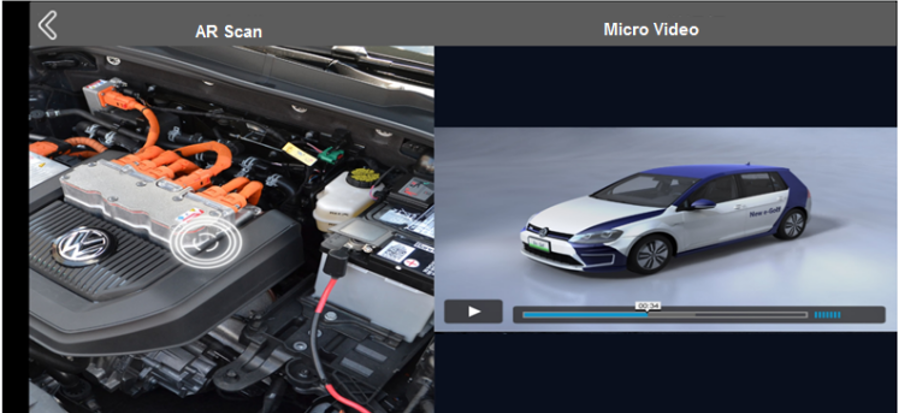
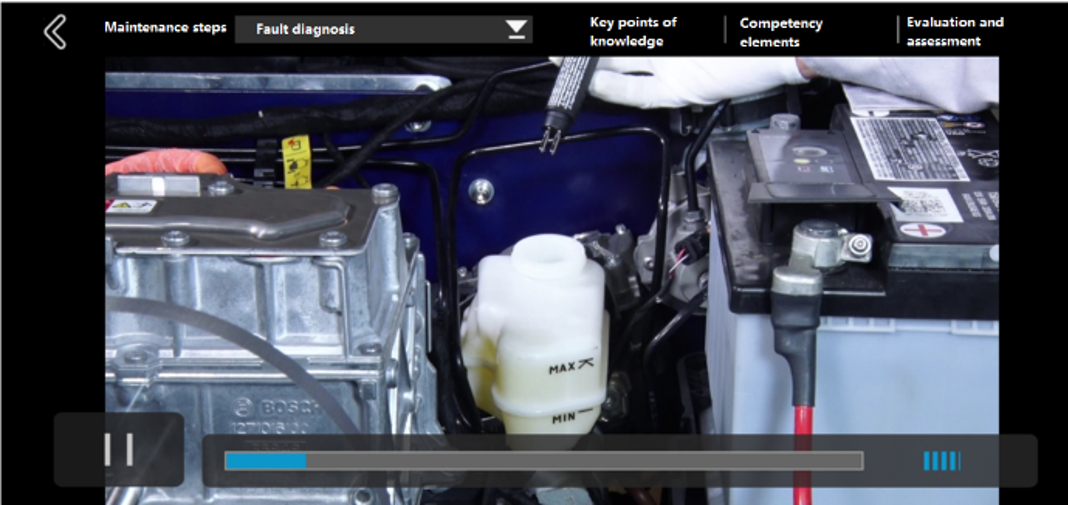
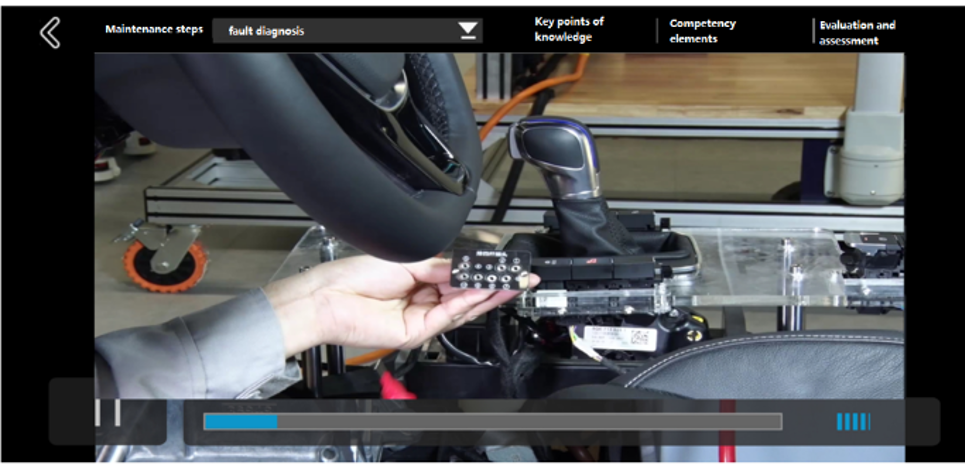
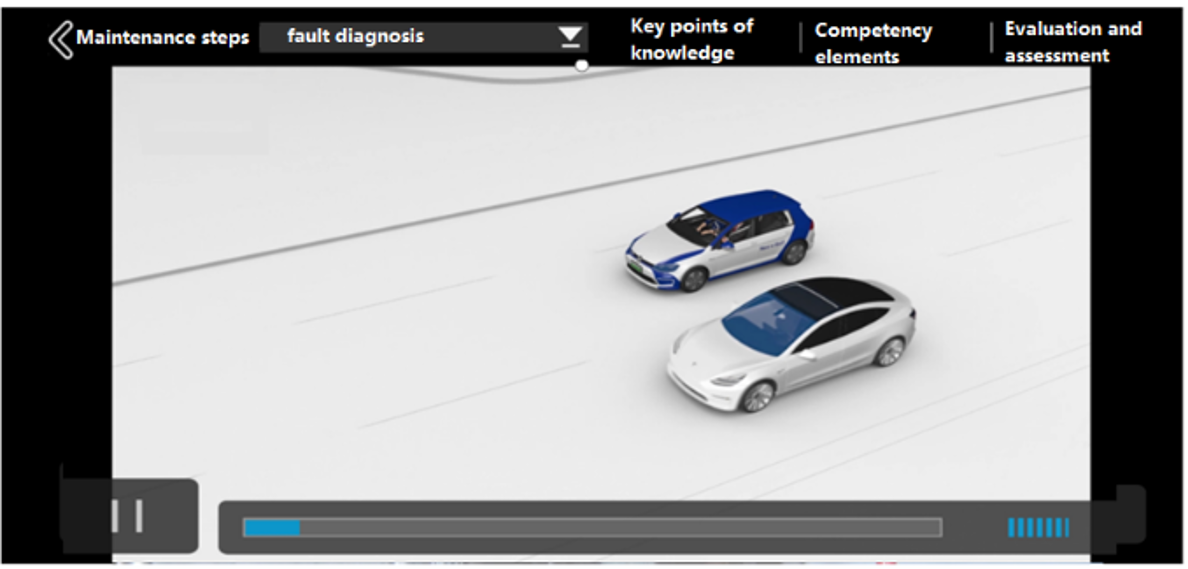
Click the maintenance steps to view the maintenance method of the fault case. The maintenance video is based on real vehicle maintenance as a guide. The video micro-course content includes the real display of the fault cause, diagnosis and implementation method, fault conclusion analysis, etc. during the video operation process, the training equipment, tools, measuring tools, teaching scene, and integrated teaching aids are fully matched, which reduces the pressure of teachers It greatly improves the teaching efficiency and avoids the teaching pain points that the micro-course and hardware can't match.
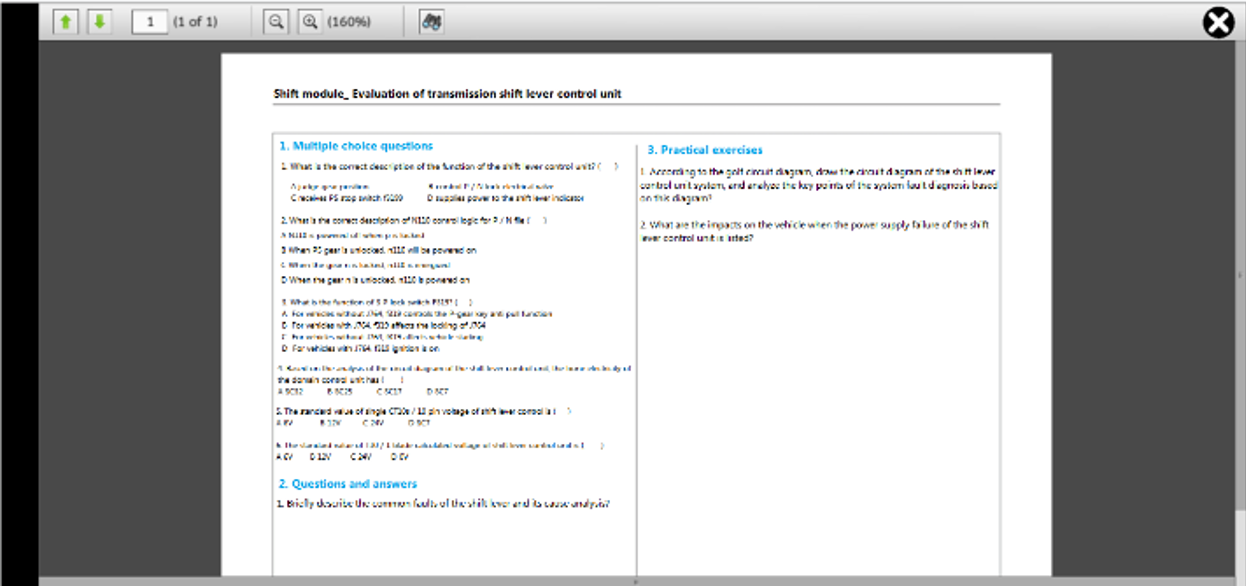
In the process of video playing, any fast forward, fast backward, pause, and other operations can be carried out. When the video is playing, the maintenance steps can be switched directly, the knowledge points can be displayed and explained, the ability elements can be displayed and explained, and the assessment and evaluation can be displayed and explained.
When playing the video, you can slide up and down on the right side of the screen to control the volume.
Intelligent fast switching makes the teacher teaching more efficient.
3. Key functions of APP application knowledge
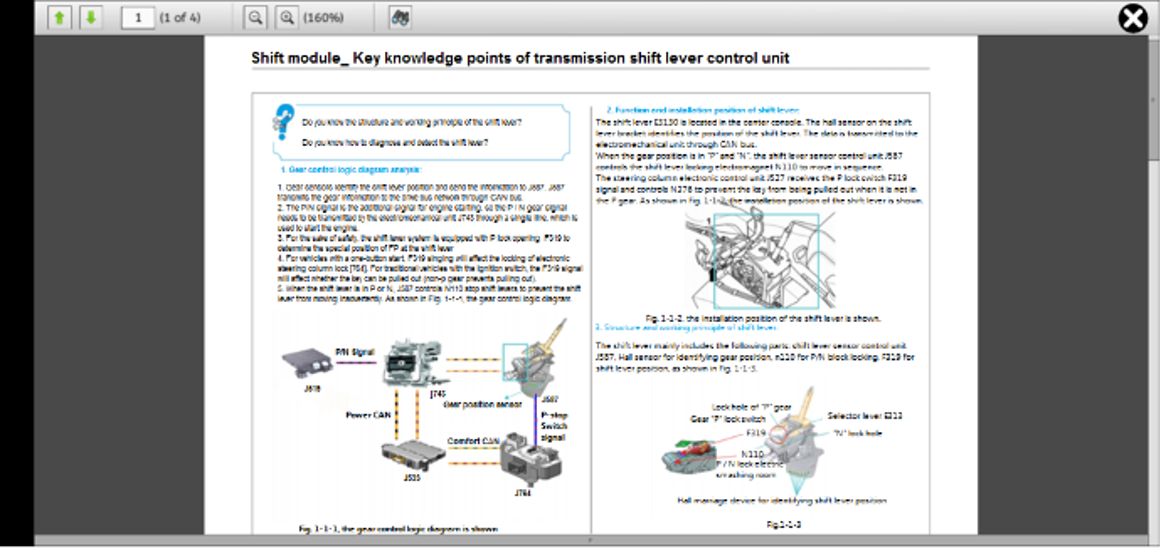
The key point of knowledge is that screening is the essence of the technical information released by the master plant training teacher based on the technical information released by the case and the technical department, which is summed up by internal discussions and repeated tests so that it can match the occupation education characteristics and meet the content of the curriculum conversion rate. The theoretical support of its micro-course video maintenance module, through the explanation of knowledge points, students can fully grasp the theoretical knowledge points needed to eliminate the fault. The knowledge points mainly to provide the knowledge information corresponding to the fault point, and the knowledge point information mainly includes fault cause analysis, circuit analysis, installation position, system composition, the working principle, and other teaching content expansion. In the process of explaining the key points of knowledge, we can enlarge the teaching content directly by pulling two fingers to make the classroom teaching materials more colorful. Each knowledge point is from simple to difficult distribution, so that the teaching process from simple to deep, easy for students to understand.
4. App application capability elements and functions
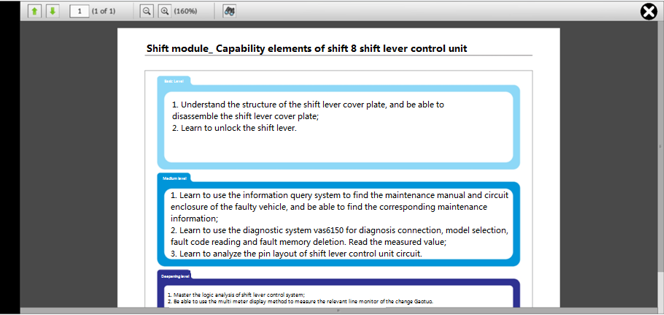
The ability elements are made according to the standards of the maintenance front line and the technical requirements of the manufacturer. The ability elements that must be possessed by each fault case are displayed at different levels so that the standards and requirements of the maintenance process can be fully displayed. The training objectives are clear and the key points of teaching are implemented. The technical ability and level standard that students need to have is through troubleshooting and standard maintenance The operation is reflected. The whole teaching process is carried out around the ability elements. The layered design will make the students' operation and the teacher's explanation process focus on the key points, so as to achieve the learning goal of "unity of knowledge and practice". In the process of explaining the ability elements, two fingers can be pulled directly into the teaching content for amplification.
5. App application case summary function
According to the whole module teaching system, summarize the related problems and diagnosis process encountered in the course, sort out the teaching content and practical operation points, master the contents of cases or projects through diagnosis tree diagram or inspection flow chart, and make visual summary and analysis of the course.
Course Resources
1
The course module of each system has the introduction of teaching knowledge points to do topic or real fault case phenomenon introduction, including topic introduction, complete test and case reproduction of fault phenomenon in animation. Let the students be interested in the possible causes of the fault cases, and describe the relevant knowledge of the course in detail after the introduction of each course, and explain the working principle and technical requirements of the relevant courses.
2
The applied curriculum system of new energy EUP electrical contact personnel system includes 29 learning task knowledge points of electrical and electronic courses, 22 learning task knowledge points of high voltage safety, new energy vehicle recognition, new energy maintenance and charging flow, and 22 learning task knowledge points of body electrical and air conditioning chassis transmission.
| System module | Course module | Course information | Course content |
| Automotive Electrical and electronic | 01 -Fundamentals of electricity | Basic knowledge of electricity | 01 - atoms, electrons and charge carriers |
| 02 - difference between AC and DC | |||
| 03- Ohm's law, the relationship between voltage, current and resistance | |||
| Electronics, Electrical measurement | 04 - resistance, voltage and current measurement | ||
| 05 - diode, triode, capacitance measurement | |||
| 06 - self-induction and mutual inductance | |||
| 07- use of multi meter and current clamp | |||
| In series, Parallel circuit | 08-diy circuit connection Teaching | ||
| 09- series and parallel measurement characteristics and Practice | |||
| 02- common automotive sensors | Overview of sensors | 01- description of common automobile sensors | |
| 02 - definition and calibration of sensors | |||
| Characteristics and classification of sensors | 03- Features and brand introduction of sensor | ||
| 04 - sensor classification features | |||
| 03- sensor application and measurement | Application and measurement method of sensor | 01 - engine speed sensor | |
| 02 - camshaft position sensor | |||
| 03- wheel speed sensor | |||
| 04-ntc temperature sensor | |||
| 05 - pressure sensor | |||
| 06- height sensor | |||
| 07 - Sunshine rainfall sensor | |||
| 08- step and broadband oxygen sensor | |||
| 04- actuator | Types and applications of actuators | 01- features and types of actuators | |
| Hydraulic actuator | 02- Characteristics and types of automobile hydraulic actuator | ||
| Actuator motor | 03- common motor types and working principles of automobile | ||
| 04 - operation of permanent magnet motor | |||
| 05 - circuit diagrams and circuit symbols | Circuit diagram symbols | 01 - circuit diagram symbols | |
| Circuit diagram recognition | 02- circuit diagram reading | ||
| 06- vehicle network system | Composition of vehicle network | 01- vehicle network | |
| Network system cognition | 02- cognition of vehicular network structure | ||
| High voltage safety course | 01 - safety voltage | Safety voltage description | 01 - safety voltage description |
| 02 - new energy high pressure hazard identification | Understanding of high voltage components | 01-Pressure components on - e-Golf | |
| High voltage system components | 02 - composition of high voltage system | ||
| 03 - how to correctly identify high voltage components | |||
| 03 - high voltage safety protection | High voltage safety protection | 01 - high voltage safety protection method | |
| 04- first aid for electric shock | First aid process after electric shock | 01 - order of emergency calls | |
| CPR cardiopulmonary resuscitation | 02-cpr cardiopulmonary resuscitation process |
|
System Module |
Course Module |
Course Information |
Course Content |
|
Automotive Electrical and electronic |
01 - Fundamentals of electricity |
Basic knowledge of electricity |
01 - atoms, electrons and charge carriers |
|
02 - difference between AC and DC |
|||
|
03 Ohm's law, the relationship between voltage, current and resistance |
|||
|
Electronic and electrical measurement |
04 - resistance, voltage and current measurement |
||
|
05 - diode, triode, capacitance measurement |
|||
|
06 - self-induction and mutual inductance |
|||
|
07 use of multi meter and current clamp |
|||
|
New energy vehicle recognition |
05 - overview of new energy |
Development background of new energy vehicles |
01 development history of new energy steam |
|
06 hybrid drive |
Hybrid drive |
01 - concept of hybrid drive |
|
|
Hybrid drive control |
02 hybrid drive control strategy |
||
|
regenerative braking |
03 - regenerative braking and energy recovery |
||
|
07 pure electric drive |
Blade Electric Vehicles |
01 - pure electric vehicle development and planning |
|
|
High voltage components of pure electric vehicle |
02 - high voltage battery |
||
|
03 motor |
|||
|
Use of pure electric vehicles |
04Use of e-golf pure electric vehicle |
||
|
New energy maintenance and charging process |
08 maintenance process |
New energy vehicle maintenance |
01 operation process of maintenance and inspection of new energy vehicles |
|
09 charging introduction |
Charging interface and charging state |
01 - charging instructions |
|
|
Charging pile and power station |
02 Introduction of charging pile and strategy of power station replacement |
||
|
New energy body electrical |
01 power supply module |
The vehicle has no electricity |
01 - leakage of door control unit of right front door |
|
Vehicle cannot be unlocked |
02 - central locking sc25 fuse blown |
||
|
02 - lighting module |
Front and rear fog lights don't work |
01-led damaged |
|
|
The brake light doesn't work |
02 - brake light doesn't work |
||
|
03 - window module |
Abnormal glass lifting control |
01 Lin line fault of right front door control unit |
|
|
No one button lifting function |
02 - window regulator switch failure |
||
|
04 - wiper and cleaning module |
Wiper failure |
01 - the Lin line of wiper motor is short circuited to the ground |
|
|
No water spray for windshield cleaning |
02-v5 water jet motor failure |
||
|
05 - Comfort entry module |
Entry function failure |
01 - key position not recognized |
|
|
Left rear door handle failure |
02 door handle failure |
||
|
New energy air conditioning system |
06 - temperature module |
The cooling effect of air conditioner is not good |
01 - insufficient refrigerant charge |
|
There is a difference between the left and right temperatures |
02 - outlet temperature sensor circuit fault |
||
|
03 - servo motor failure |
|||
|
07 air volume and direction module |
The air conditioner doesn't work |
01 poor contact of Lin line of blower |
|
|
02 - dirty filter element of air conditioner |
|||
|
New energy chassis transmission system |
08 shift module |
Gear failure occasionally |
01 - transmission shift control unit failure |
|
09 - brake module |
Insufficient braking force |
01 - uneven wear of brake disc |
|
|
02 - air in pipeline |
|||
|
Abnormal parking brake |
03 - left rear wheel handbrake motor cannot be released |
||
|
10 steering module |
Oil leakage of steering gear outer ball joint |
01 - outer ball joint rubber damaged |
|
|
Steering system alarm |
02 - steering gear internal failure |
||
|
11 - suspension module |
Abnormal noise of shock absorber |
01 - damper top glue failure |
